
If you’re diving into microservices or looking to scale your systems, you’ve probably heard of <b>Event-Driven Architecture (EDA)</b>. It’s a buzzword for a reason — EDA is a game changer when it comes to building responsive, scalable applications. But what exactly is it, and how does it stack up against more traditional approaches? Let’s break it down.
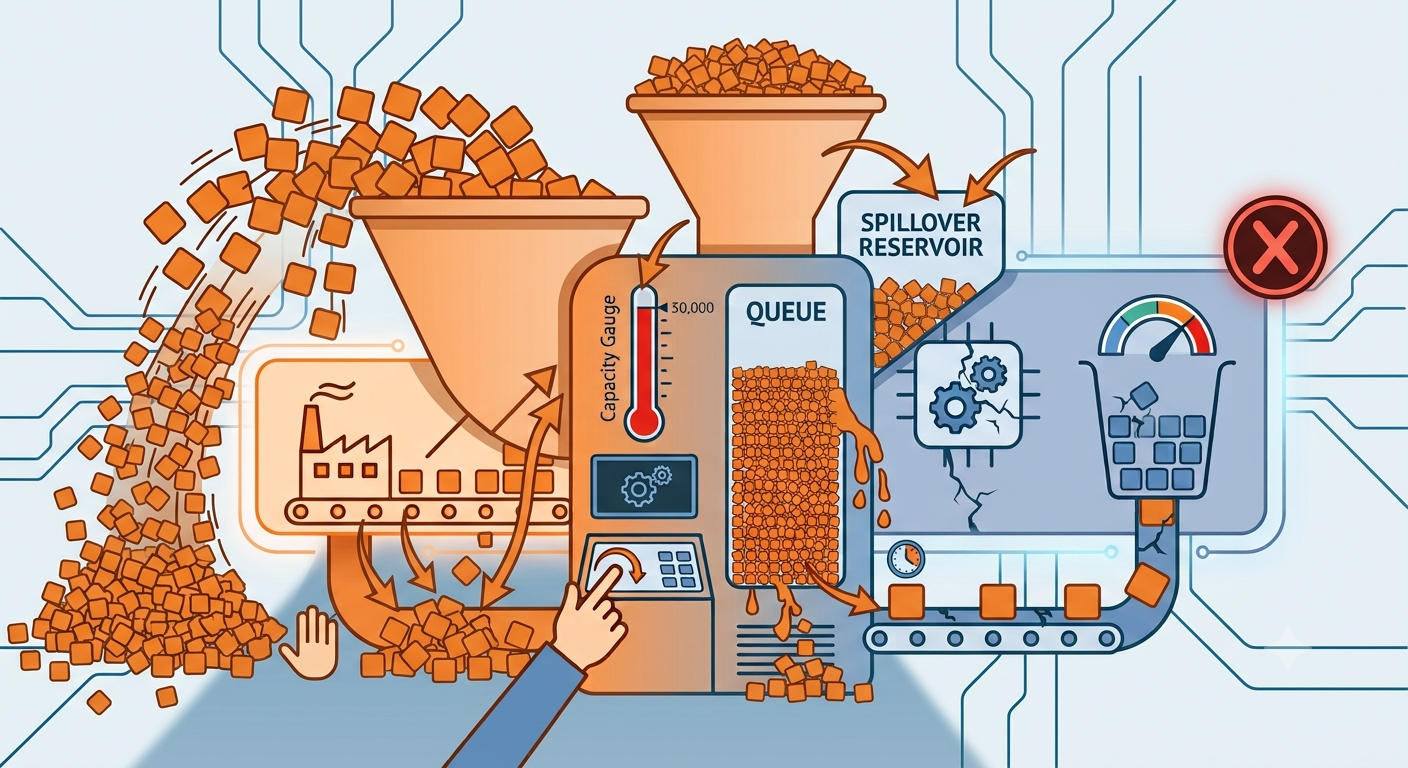
Every streaming system, every queue, every webhook integration eventually meets a producer faster than its consumer. Backpressure is what decides whether that moment is a graceful slowdown or a cascading outage.

Conway's Law says systems mirror the communication structure of the organizations that build them. Domain-Driven Design says a bounded context should mirror the domain. Most of the time, the domain loses that argument.

Both are called 'events.' Both get published to a broker. That surface-level similarity is exactly why teams keep publishing one where they should be publishing the other, and why the mistake is so hard to notice until a schema change breaks three unrelated services.
See more articles
Browse the full writing index →